28 January 2025
Let the deduction hunt begin – how to find the hidden gems
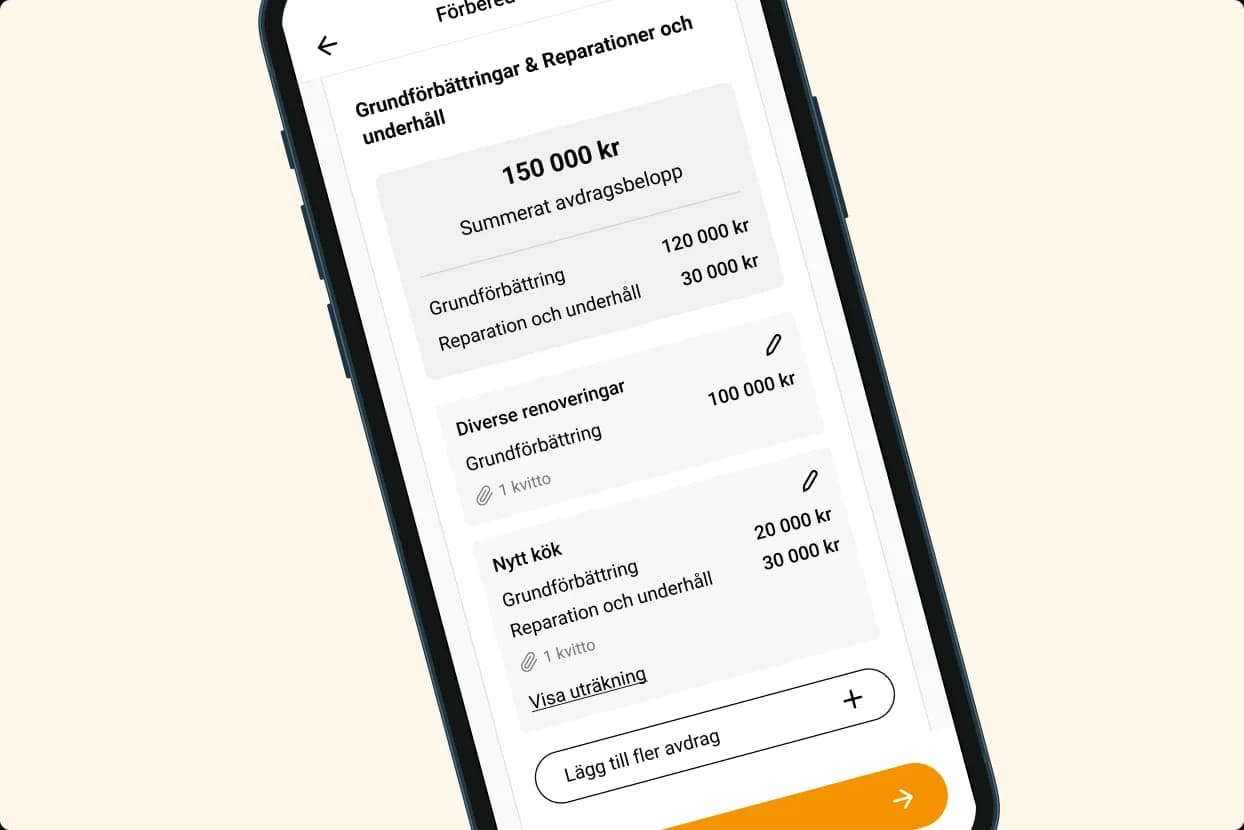
We help you find every deduction you are entitled to. It can feel like looking for a needle in a haystack of legal clauses, but don't worry – the Declaration service has the magnet.
"Can I deduct the bathroom from 2018?" "Does it count as an improvement if I replaced vinyl flooring with oak parquet?"
We hear these questions every day. The rules are tricky, but the basic principle is that you pay tax on the gain – and to work out the gain, we need to deduct what you have spent on improving your home.
The basic rules – three different piles
To keep things simple, your projects can be divided into three categories. Which one they end up in depends on what you did and when you did it.
1. The full amount (basic improvement)
This covers work that adds something new or changes the floor plan.
- Rule: Deductible no matter how long ago it was done (during your ownership).
- Examples: You build an extra room, change the floor plan (move walls/drains), convert an attic or install a washing machine where there wasn't one before.
2. Upgrade (material replacement)
This covers work where you replace something old with something significantly better.
- Rule: Deductible no matter how long ago it was done.
- Examples: You replace basic vinyl flooring with oak parquet, or tile a bathroom that previously had wet-room wallpaper. The full cost of the upgrade is normally deductible.
3. Repairs and maintenance (same standard)
This covers work where you freshen things up or replace worn materials with new ones of the same standard.
- Rule: Only deductible if done in the last 5 years.
- Examples: You repaint, sand floors, replace white goods, replace roof tiles or renovate the bathroom to the same standard as before.
The small print (no deduction)
There are a few things the Swedish Tax Agency (Skatteverket) never accepts deductions for:
- Your own labour: You cannot deduct your own time, only materials and tradespeople's costs.
- Your own tools: Buying hammers, saws or paintbrushes.
- Under SEK 5,000: If your total renovation costs in a year are less than SEK 5,000, you get no deduction for that year.
- ROT deduction: You cannot deduct the part of the labour cost the state has already paid through the ROT deduction.
- Insurance payouts: Have you received money from your insurer for damage? Then you cannot deduct that part of the cost.
Missing a receipt?
No problem, losing paperwork is human. The main rule is "no receipt, no deduction", but in Sweden we have free evaluation of evidence (fri bevisprövning). This means you can use other ways to show it is likely that you had the expense.
If the original receipt is gone, you can try to piece together the evidence with:
- Bank statements: By far the most important. Can you show a payment to a tradesperson or builders' merchant that matches the renovation in timing and amount?
- Photos (before/after): Prove that the work was done and what standard was chosen.
- Drawings & building permits: Support the timing and scope.
- Property tax return/valuation report: Can show the condition at different points in time.
Can you estimate the cost? Simply "guessing" or using a rough standard estimate is rarely accepted. You must be able to make the cost credible. The Declaration service helps you gather the documentation you actually have to build as strong a case as possible.
Tip: Have you saved your receipts digitally in House:ID? Then the problem is already solved!