31 January 2025
Deductions for water and drainage systems
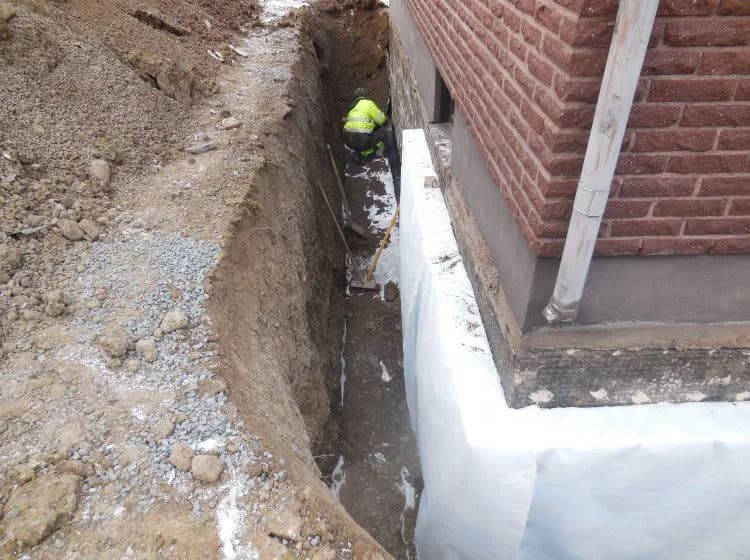
A working water and sewage system is crucial to how a house functions and how long it lasts. This work is often costly, but when you sell, there are good opportunities to deduct these costs and reduce your capital gains tax.
However, the rules on what counts as a "new standard" and what is just "necessary maintenance" are strict. The Declaration service helps you sort your invoices correctly according to the practice of the Swedish Tax Agency (Skatteverket).
The basic rules for water, sewage and drainage
To make the right deductions, you need to know the difference between improving and maintaining.
1. Basic improvements (upgrades & new installations)
Applies when you install something that wasn't there before, or switch to a system with a significantly higher standard or capacity.
- Time limit: Deductible no matter how long ago it was done (during your ownership).
- Examples: Connecting to the municipal water and sewage network, installing a new water filter, drilling a deep well.
2. Repairs and maintenance
Applies when you fix faults, replace old pipes with new ones of the same standard or redo drainage that has reached the end of its life.
- Time limit: Only deductible if the work was carried out in the year of sale or the 5 preceding calendar years.
- Requirement: The home must be in better condition when you sell it than when you bought it.
What applies to your work?
Sewage
This is often where big upgrades happen, giving good deductions.
- Basic improvement (entire period of ownership):
- Switching from a private sewage system (e.g. a three-chamber septic tank) to the municipal sewage network.
- Installing a small-scale sewage treatment plant where there was previously a simpler septic tank.
- New sewage installation in spaces that previously had none (e.g. when converting a basement or guest house).
- Repairs & maintenance (max 5 years):
- Relining old sewage pipes (treated as equivalent to a repair).
- Replacing cracked concrete pipes or clearing blockages.
- Replacing an old three-chamber septic tank with a new equivalent one.
Drainage – a common trap
It's easy to assume new drainage is always an improvement, but the Swedish Tax Agency often sees it as maintenance, since drainage has to be redone roughly every 30–40 years.
- Basic improvement (the material): If, when redoing the drainage, you fit a new type of insulation (e.g. Isodrän/Pordrän) on the basement wall that wasn't there before, the cost of the insulation material itself counts as an improvement (deductible at any time).
- Repairs & maintenance (the labour): The excavation itself, the drainage pipes, the geotextile and restoring the ground normally count as maintenance. So you can only deduct this if the work was carried out in the last 5 years.
Water and wells
- Basic improvement:
- Drilling a new deep well (if the old one was a dug well or had run dry).
- Connecting to the municipal water supply.
- Installing a new water softener/water filter where there was none before.
- Repairs & maintenance:
- Servicing the water pump or replacing a broken pump.
- Replacing the filter medium in an existing treatment system.
- Cleaning out a well.
Stormwater and soakaways
- Basic improvement: Installing an underground soakaway or infiltration crate to handle stormwater on the plot (if there wasn't one before).
- Repairs & maintenance: Clearing or re-digging an existing soakaway.
Summary
- Upgrade (e.g. private -> municipal): Always deductible.
- New technology (e.g. new insulation when redoing drainage): Always deductible.
- Fixing & replacing (e.g. relining, drainage work): Deductible max 5 years back.
Finding the drainage invoice hard to interpret? It's often hard to know how much of the invoice relates to improvement (insulation) and how much is maintenance (labour). In the Declaration service, we help you estimate the split so your deduction is correct under the rules.